Before You Count Another Blessing: Giving Difficult Feelings Their Due
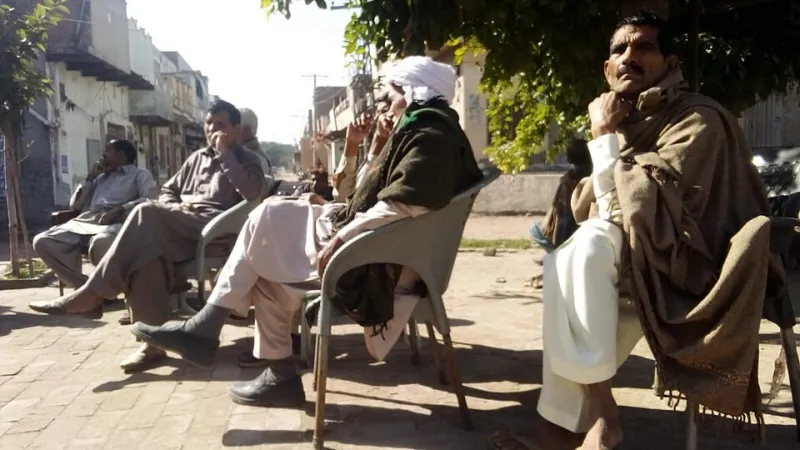
Photo: Anant Dhillon, CC BY-SA 4.0, via Wikimedia Commons
In Blackburn, as in much of the country, November arrives with a familiar set of instructions. Be thankful. Focus on the good. Look on the bright side. These remarks are usually offered with kindness, perhaps by a friend, a colleague or a well-meaning relative. Yet for someone carrying grief, anxiety, depression or the quieter exhaustion of a difficult year, such advice can land less like comfort and more like a further demand. The problem is not gratitude itself. The problem is what happens when gratitude becomes compulsory.
Gratitude and enforced cheerfulness are not the same thing
Gratitude, at its most humane, is a form of attention. It notices what is present without denying what is absent. It might be the warmth of a cup of tea, a message from a friend, a dry hour on the walk home. It does not require a person to pretend that everything is well. Enforced cheerfulness is different. It asks for a performance, and it measures success by how convincingly that performance is delivered.
This distinction matters because many people in distress are already working hard to appear fine. They are managing conversations, holding down responsibilities and trying not to burden others. When gratitude is added as another obligation, it can become one more standard against which they expect to fail. The implication is subtle but powerful: if you were truly trying, you would feel more thankful than this.
Why 'count your blessings' can sting
There are several reasons why the instruction to count one's blessings can make a difficult moment worse. First, it can invalidate what is actually being felt. A bereaved person may be told to be grateful for the years they had. Someone facing money worry may be reminded that others have less. A person living with anxiety may be encouraged to focus on what is going well. Each statement may contain truth, but truth alone does not make a response helpful. Sometimes it simply tells the person that their pain is inconvenient.
Second, gratitude advice can invite comparison. It can suggest that suffering is only legitimate if it ranks highly enough against the suffering of others. This is a poor way to understand distress. Pain is not a competition, and shame is rarely a useful invitation to recovery.
Third, the pressure to be grateful can obscure genuine problems. If someone is exhausted at work, grieving a relationship or struggling with low mood, the instruction to look on the bright side may delay the more honest question: what actually needs attention here? Gratitude is not a substitute for support, rest, medical care or change.
The performance of being thankful
In recent years, gratitude has become part of a wider culture of visible wellbeing. Journaling prompts, social media posts and workplace initiatives often present thankfulness as a task to be completed and displayed. For some people this is genuinely useful. For others, it becomes another arena for perfectionism. The notebook is filled, the positive reframe is offered, and yet the underlying sadness remains. The result can be a private sense of fraudulence.
This is particularly poignant in a season that already asks a great deal of people. Darker evenings, financial pressure and the approaching expectations of Christmas can make November and December feel heavy. In Blackburn, the town centre lights and familiar routines may bring comfort to some and sharpness to others. There is no single correct emotional response to a season, and there is no moral failing in finding it hard.
A more honest kind of thankfulness
A compassionate alternative is not to abandon gratitude but to loosen its grip. Gratitude can sit alongside sorrow. A person can be thankful for a loyal friend and still grieve the one who is absent. Someone can appreciate a quiet morning and still dread the day ahead. These are not contradictions; they are simply the ordinary complexity of being human.
It can help to separate appreciation from obligation. Rather than asking, 'What should I be grateful for?', a gentler question might be, 'What, if anything, feels steadying today?' The answer may be very small, or there may be no answer at all. Both are permitted. It can also help to notice the difference between chosen reflection and external pressure. A private moment of noticing is not the same as being told to smile for the benefit of others.
Practical reflections may include naming difficult feelings without immediately correcting them, setting boundaries around conversations that demand positivity, and allowing grief or anxiety to be spoken aloud in a setting where it will not be judged. It may also mean seeking support when the effort of appearing grateful is becoming harder than the honesty of saying, 'I am not okay.'
What counselling can offer
Counselling does not require a person to arrive with the right attitude. It offers a confidential space in which complicated feelings can be explored without being talked out of. A counsellor is not there to insist on a positive reframe or to find a silver lining. The work is often slower and more respectful than that. It may involve understanding where the pressure to be thankful came from, recognising the cost of constant self-correction, and making room for the feelings that have been kept out of sight.
For readers in Blackburn who are tired of being told to count their blessings, the invitation is not to become less grateful. It is to become more honest. Gratitude that is real can hold difficulty within it. It does not need to be performed, and it does not need to be proved. If this November feels heavy, that is not a failure of thankfulness. It is a human signal that something deserves care.