The Words That Stay Untranslated: Counselling Across Two Languages in Blackburn

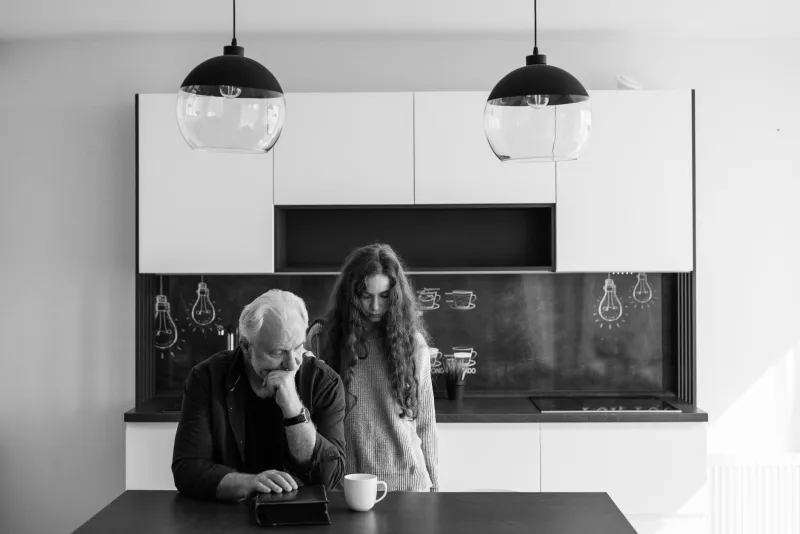
Photo: multilingual counselling session with interpreter in therapy room UK, via logos-world.net
In Blackburn, it is ordinary to move between languages before lunchtime. English at work, at school or at the GP surgery; another language at home, on the phone to relatives, in the kitchen, in prayer. Emotional life is bilingual too, even when no one names it that way. A person may explain a worry in English with perfect clarity and still feel that the real weight of it sits somewhere else, in a word or a phrase that only makes sense in the language they learned first.
Counselling is often described as a talking therapy. That description is accurate but incomplete. It is also a listening therapy, and listening becomes more complicated when the room contains more than one language. This is not a niche concern in a town as diverse as Blackburn. It is part of ordinary access to care.
Why a feeling can sound different in your first language
A mother tongue is not simply a set of vocabulary. It is the language of childhood, of being soothed, of being told off, of family jokes and family silences. It carries early memories and bodily associations. For some people, saying 'I am frightened' in English feels manageable, almost clinical, while the same admission in their first language brings tears without warning. For others, English creates a useful distance: it allows them to describe anger or grief without feeling exposed.
Neither experience is more authentic than the other. Both are real. The useful question is not which language is truer, but what each language makes possible. English may be the language of work and public composure. A first language may be the language of intimacy, duty, faith or shame. In counselling, noticing that difference can be more helpful than forcing everything into one tongue.
The things that do not cross the threshold
Translation is rarely a straight exchange. Words such as respect, honour, duty, home or reputation carry family and community meanings that a dictionary cannot settle. A client may say in English, 'I do not want to disappoint my parents', while the feeling underneath is closer to a sense of moral obligation that has been shaped since childhood. A counsellor who hears only the English sentence may miss the size of the burden.
Shame is another area where language matters. In a close-knit town, the fear of being talked about is not imaginary. People may worry that a counsellor will know their family, or that an interpreter will recognise them. They may feel that speaking about family difficulties is a betrayal, or that distress should be kept inside the home. These beliefs deserve to be spoken about openly, not treated as obstacles to be brushed aside. A counsellor can help a client test the boundaries of confidentiality in plain terms, and can discuss how to speak about family without naming people unnecessarily.
Code-switching is not confusion
Moving between languages mid-sentence is often called code-switching. It is a skill, not a failure of fluency. In therapy, it can be a signal. A client might begin in English, switch to their first language when the material becomes painful, then return to English to regain composure. That movement is information. It shows which self is speaking, and what that self needs.
A counsellor can make room for this simply by saying, 'Use whichever language feels closest.' Mixed sentences are allowed. A phrase can be repeated in both languages. The aim is not to produce a perfect translation but to help the client feel understood. If a word will not cross over, the counsellor and client can stay with it, describe it, and let it have a place in the room.
Working with an interpreter
Some clients will need an interpreter, either for counselling itself or for appointments that lead to counselling. The first practical point is that interpreters should be professional and bound by confidentiality. Family members, friends and especially children should not be asked to interpret emotional material. The temptation is understandable, particularly when waiting lists are long and appointments are hard to arrange, but the cost to the client can be high. A child should not be carrying a parent's distress, and a relative may have their own view of what should be said.
You can ask for an interpreter for GP appointments and NHS talking therapies. If you are arranging private counselling, ask whether the counsellor works with interpreters and how that is funded. It is reasonable to ask about the interpreter's language, dialect and gender, and to say if you would prefer someone not from your immediate community. That request is not rude; it is about making the space safe enough to speak.
Before the session, it can help to agree how the interpreter will work. Good interpreting in a therapy setting is usually first-person and neutral: the interpreter conveys what is said without advising, softening or summarising. The session may feel slower. That is normal. You are allowed to pause, ask for something to be repeated, or say that a translation does not feel right.
Finding a counsellor who understands
A counsellor does not have to share your background to be helpful, but they do need cultural humility. That means being curious about how family, faith, migration, race and community expectations shape your life, without making you the teacher. It also means being honest about what they do not know.
When making contact, you can ask direct questions. Has the counsellor worked with clients from your community? Do they have experience of working with interpreters? How do they respond if religious or family values are central to the difficulty? A good counsellor will not be offended by these questions. If the fit is wrong, you are allowed to change counsellor. Finding the right person is part of the work, not a sign of failure.
Practical ways to bring both languages into the room
You do not need to wait for a bilingual counsellor to make use of your first language. A few simple agreements can help:
- Decide at the start which language you will begin in, and give yourself permission to change.
- Write down a few important words or phrases in your first language and bring them to the session.
- Describe an untranslatable word rather than forcing an English equivalent.
- Use metaphors, proverbs or images from your first language, even if they need explaining.
- Ask the counsellor to check understanding rather than assuming it.
- If an interpreter is present, say when you need a pause or a different explanation.
These are small adjustments, but they can change the atmosphere of a session. They signal that the whole person is welcome, not only the English-speaking part.
A final word on belonging
Speaking about difficulty in counselling is not a rejection of family or community. It is a way of taking your own experience seriously. For people who live between languages, the therapeutic task is often not to choose one tongue over the other, but to stop treating one as more legitimate. Both belong. If English is not the only language in your life, say so when you first enquire about counselling in Blackburn. It is not an inconvenience. It is part of the picture, and it deserves to be heard.