Cold Mornings, Empty Chairs: Carrying Grief Into a Blackburn Winter
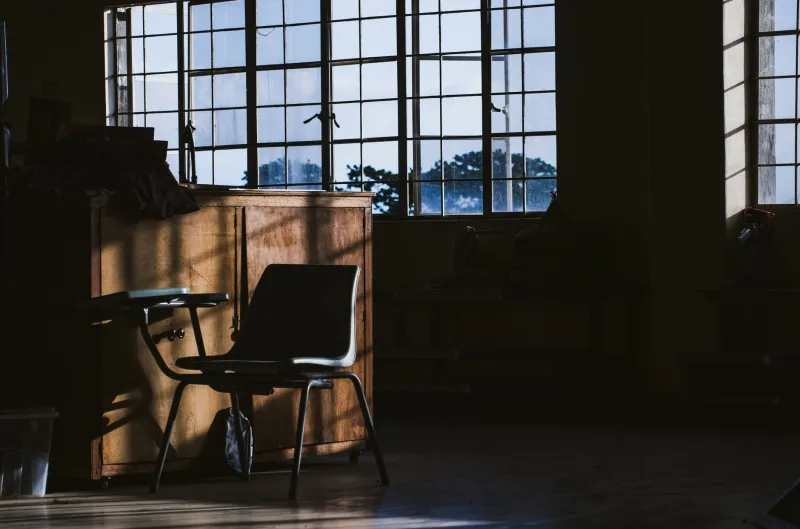
There is a particular quality of light in Blackburn as November gives way to December. It arrives low across the rooftops, stays a little while, and then is gone. For many people this is simply the cue for warmer coats and the familiar rituals of the season. For someone who is grieving, it can feel like a door closing. The winter ahead is one the person they lost will not share, and every shortened afternoon makes that fact a little more visible.
If this is your first winter or first Christmas without someone, you are not alone in finding it difficult. Grief does not follow the calendar, but it is often stirred by it. The reflections below are offered not as a set of rules but as a companion for the weeks ahead.
Why winter can sharpen grief
Grief is not a steady state. It ebbs and flows, and it is unusually responsive to atmosphere. Winter brings less daylight, more time indoors and a greater reliance on routine. For a bereaved person, that combination can reduce the distractions that ordinarily keep difficult feelings at arm's length. The quiet of a dark afternoon is not restful for everyone; for some, it is simply quieter space in which to miss someone.
There is also the matter of contrast. The season is built around togetherness, and the surrounding culture assumes it. Advertisements show full tables and crowded rooms. Conversations at work turn to plans and presents. When your own table has an empty chair, that contrast can be painful in a way that is hard to explain to people who are not living it.
The calendar's quiet ambushes
Anniversaries are rarely confined to a single date. A birthday, a wedding anniversary, the anniversary of a death, the first Christmas without them: each carries its own weight. But grief is often triggered by smaller, less predictable things — a song in a shop, the smell of mince pies, a particular brand of biscuits that only they bought. In Blackburn, the switch-on of the town centre lights, a carol service at the Cathedral or a walk past the market can bring unexpected reminders. None of these are wrong or dangerous. They are simply moments when the loss becomes more present.
It can help to look at the weeks ahead and identify two or three dates that you anticipate will be hard. You do not need to solve them. Knowing they are coming can reduce the sense of being ambushed, and it gives you room to decide what you would like that day to look like.
Traditions that no longer fit
Families often carry traditions for years without examining them. The same meal, the same visits, the same sequence of events. After a bereavement, some of these traditions may still feel comforting. Others may feel hollow, or may ask you to perform a cheerfulness you do not have.
You are allowed to change them. You are allowed to do something different, to do less, or to do nothing at all. You might choose to keep one small element and set the rest aside for this year. You might decide to hold a quiet remembrance of your own, or to spend part of the day somewhere that feels neutral. There is no requirement to reproduce a former Christmas in order to honour the person you have lost.
Grounding when the day narrows
Grief can feel physical: a tight chest, a hollow stomach, a sudden inability to concentrate. When that happens, grounding techniques can help bring you back to the present. They are not a cure, and they are not meant to be. They are simply a way of steadying yourself for the next few minutes.
A few approaches that people find useful:
- Name five things you can see, four you can hear and three you can touch. This is a common grounding exercise and it works because it asks your attention to do something specific.
- Run cool water over your wrists or hold something cold. The physical sensation can interrupt a spiral of thought.
- Step outside for a short walk, even if it is only to the end of the street and back. In Blackburn, a few minutes in Corporation Park or along a familiar pavement can be enough to change the air.
- Breathe out for slightly longer than you breathe in. There is no need to count perfectly; the aim is simply to slow the pace.
- Contact one person and tell them where you are. You do not have to explain everything. A short message can be enough to break the isolation.
The right to decline
One of the most practical protections during the festive season is the word no. You do not owe anyone a full explanation for declining an invitation. A brief, courteous response is sufficient: thank you for thinking of me, I am not able to come this year. If you would like to say more, you can, but you are not obliged to.
If you do decide to attend something, it can help to plan an exit. Arrive in your own transport if possible, agree a time limit in advance, or ask a trusted person to check in with you. Having a route out can make an event feel more manageable.
Seeking support
Grief is not an illness, but it can place a significant strain on mental health, particularly in the first year. If you are struggling to sleep, eat or function, or if you feel persistently hopeless, it is worth speaking to your GP. Cruse Bereavement Support offers specialist help, and the Samaritans can be reached at any hour on 116 123.
Counselling can also provide a confidential space in which to speak about loss without worrying about burdening family or friends. At KWC Counselling Blackburn, we offer compassionate counselling for people across Blackburn and the surrounding area. You do not need to arrive with the right words. A first conversation can simply be about what this winter has been like for you.
The season will pass, as it always does. In the meantime, you are allowed to take it at your own pace, to decline what does not help, and to ask for company when you need it.